Sprains, Strains, and Tears: Know the difference & how to treat
Andy Curtiss, BEXSc, NASM - CPT, CES, PES; ACE - CMES; SNC, CNLP
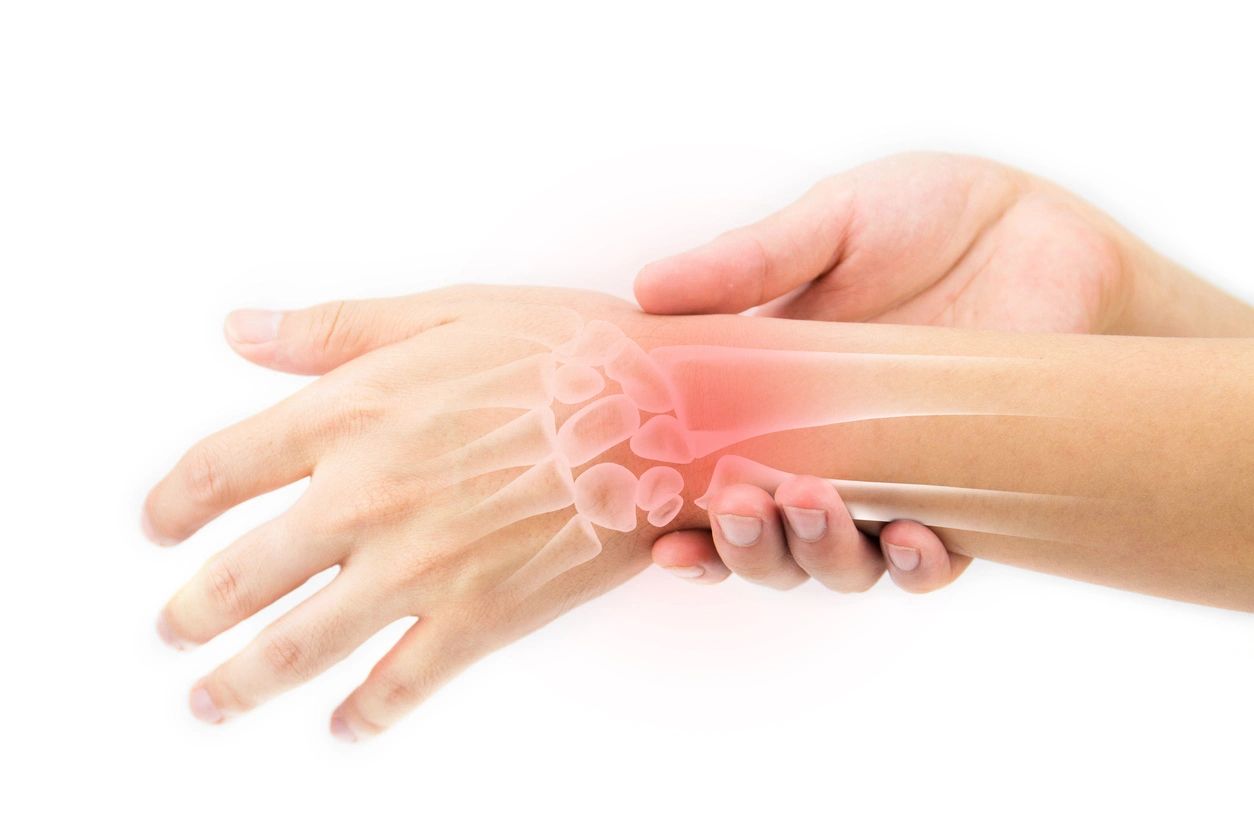
Sprains, strains, and tears are commonly experienced injuries, that people generally confuse and conflate for each other. The truth is there is a difference between them. This article is intended to give a deeper understanding of these injuries in order to help the lay person prevent and treat them. This article is not intended to be a deep dive on any one of these injuries. It is always recommended that if you are experiencing severe pain, reduction in mobility and function, that you seek the aid of a licensed physician. As with any injury neglect and lack of treatment can lead to further and more severe injury. Sprains, strains, and tears are all injuries to soft connective tissue. These tissues include Tendons, Ligaments, and Muscle. The severity of injuries as it pertains to sprain, strain and tears can range from mild discomfort to severe and disabling. In very severe cases surgical repair may be required.
Sprains
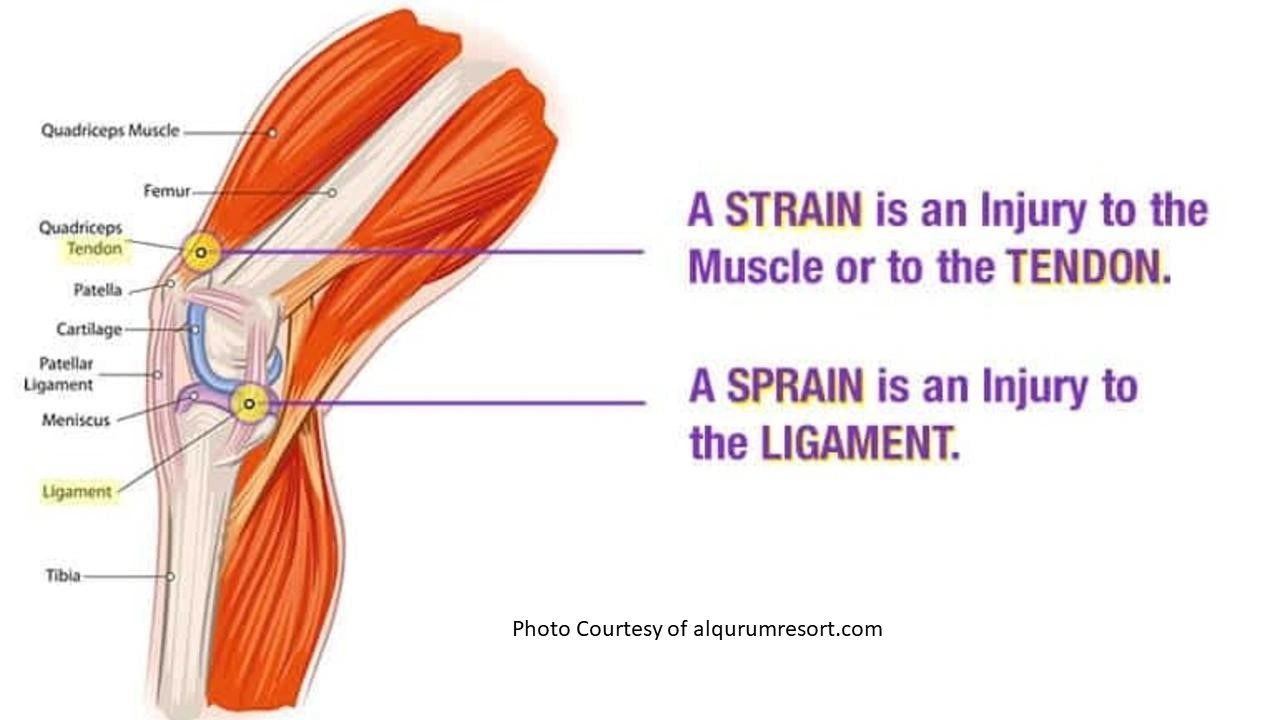
Sprains are injuries specific to ligaments. Ligaments are fibrous tissue structures that provide support at the joint. The knee is a great example of how ligaments work. Surrounding the knee are a number of supporting ligaments that aid the joint in maintaining stability. The anterior and posterior cruciate ligaments (ACL & PCL) help prevent the knee from moving beyond normal hyper extension. The medial and Lateral Collateral Ligaments (MCL and LCL) aid the knee in maintaining stability against lateral shearing forces. The knee is not alone when it comes to joints that enjoy the support of ligaments. There are ligaments in the feet, ankles, Hips, Shoulders, Elbows, Wrists, Fingers, and Spine. When a sprain occurs, it is due to the overstretching of a ligament. If the stretch is severe enough it may lead to a tear. Sprains often occur when the body makes a sudden shift in movement resulting in a shearing force.
The rapid movement and shifting of the body create momentum and causes the ligamentous tissue to stretch. This stretching results in micro tearing and in some cases full tears. As we know how the body’s healing response works, the result is inflammation, blood flow to the affected area and pain. This can be seen objectively by visible swelling and palpable heat. Subjectively the affected person describes sharp, hot, or throbbing pain. These injuries are commonly seen in the ankle knee and wrist. Injury at the ankle occurs when one jumps and lands. The ankle may roll on landing or due to improper landing mechanics the ankle may land in n unstable position causing a stretch on the surrounding ligaments. Similarly, this may occur when attempting to catch oneself during a fall with an outstretched arm and hand. In knees this can occur during contact sports when shearing force is experienced, sudden twisting, change of direction at speed, or during improper landing mechanics.
Strain
Strains occur in muscle and tendons. Muscles are the mechanism for which movement occurs and tendons connect the muscles to the bones. Muscles use leverage to create motion with each contraction. Although muscles and tendons are connected, they are separate forms of tissue that work together synergistically to accomplish the goal of movement. Strains occur in both muscles and tendons. A strain occurs when the muscle or tendon is stretched to and beyond normal capacity. Like a sprain, if the stretching is too extreme, the tissue will give and yield a tear. The mechanism of injury to a muscle and tendon when it comes to strains may be caused by rapid acceleration and deceleration under load. It can also be caused by direct trauma.
The body has built in mechanisms to prevent strains from becoming tears. One such response is the Golgi Tendon Reflex. This reflex is initiated by sensors within the muscles and tendons called the Golgi Tendon Organ which senses when the muscles or tendons are under too much strain. There are also pain receptors (Nociceptors) that signal pain and discomfort when the muscles and tendons are stretched to the point just short of injury. Strains and tears often occur at the musculotendinous junction. That is the location where the muscle and tendon ties together. Strains also occur at the site where the tendons connect to bone. Depending on the location and type of muscle it may occur at the insertion or the origin.
When a strain is experienced the stretching causes micro tearing resulting in the initiation of the healing response. This is followed by inflammation, blood flow, swelling, pain, discomfort, and limited range of motion. Much like a sprained ligament the affected site may become red, swollen, and hot to the touch. It may be tender to palpation and aggravated by movement. It is important to recognize the signs and symptoms early and to immediately cease anything that provokes further aggravation to the affected site. Strains can be considered a grade 1 tear, which involves micro tearing.
Tears
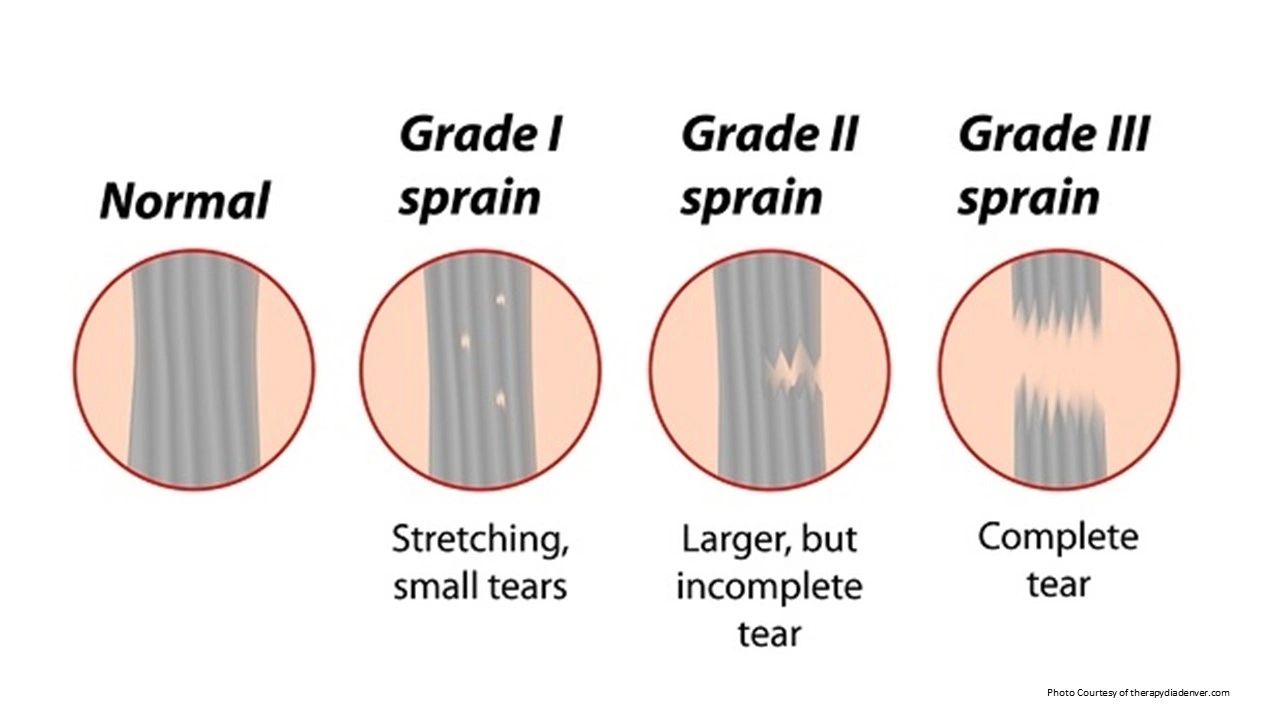
Tearing can occur in ligaments, tendons, and muscles. Tears typically fall within a graded scale. As previously mentioned, micro tears which are generally easily repaired by the body are generally classified as Grade I tears and sprains or strains. However, when the collagenous and elastin fibers become too compromised within the muscle, tendons, or ligaments, a partial or full tear then may result.
Grades
Grade 1 – Mild: Generally, involves chronic stretching or micro tearing of the tissue
· Swelling
· Redness
· Hot to the touch
· Mild pain discomfort and limited range of motion
Grade 2 – Moderate: Involves all the signs and symptoms of a grade 1, plus:
· A partial tear
· Moderate bleeding
· Bruising
· Tenderness to palpation
· Pain when weight bearing
· More limited range of motion
· More severe pain than a Grade 1
Grade 3 – Severe: All the signs and symptoms of Grades 1 and 2 plus:
· Popping or clicking at time of injury
· Immediate discoloration
· Partial or complete Rupture / Tearing
· Complete functional loss
· Moderate to severe instability
· Severe pain
Prevention
Prevention of sprains, strains, and tears is comprehensive and ranges from safe movement and proper biomechanics, appropriate loading, and the use of appropriate footwear and personal protective equipment in sports and activities. Furthermore, implementing a health warmup and adequate cooldown during exercise can help in keeping the connective tissue in a state where the likeliness of injury is lessened. Proper stretching and corrective exercises can be implemented in to training to condition the body to various stresses and movements. It should be noted that corrective exercise can be used as a prophylaxis against injury and not just for restoration and rehabilitation post injury.
- Proper Mechanics
- Running
- Jumping
- Landing
- Lifting
- Adequate Warmup/ Cooldown periods
- Regular Stretching
- Corrective Exercise as a prophylaxis
- Good posture
- Proper fit and construction of protective equipment
- Adequate and properly fitted footwear
- Safe work and play behavior
Treatment
When it comes to treatment if you feel like you need to see a doctor…..GO! To add to that, if you are experiencing an injury accompanied by a snapping, popping, or clicking, severe pain, instability, and inability to bear weight, go to the doctor or call EMS. It should be recommended that RICE or PRICE protocol be implemented immediately. If the severity and pain of injury increases, and functionality decreases in the days following the injury, see a licensed medical professional. The first goal for one to achieve experiencing one of these injuries is to reduce or eliminate pain and swelling. The next goal is early movement followed by restoration of stability and then range of motion.
These goals are implemented within the first few days of injury. Once we have reduced or eliminated pain and swelling, restored stability, and improved range of motion, we should consider returning to strength training. The last stage of this process is restoring functionality beginning with the activities of daily living (ADL). The severity of injury will affect the duration of treatment and recovery. Early treatment is essential. At first sign of injury, STOP what you are doing and implement RICE/ PRICE.
(P)RICE Protocol
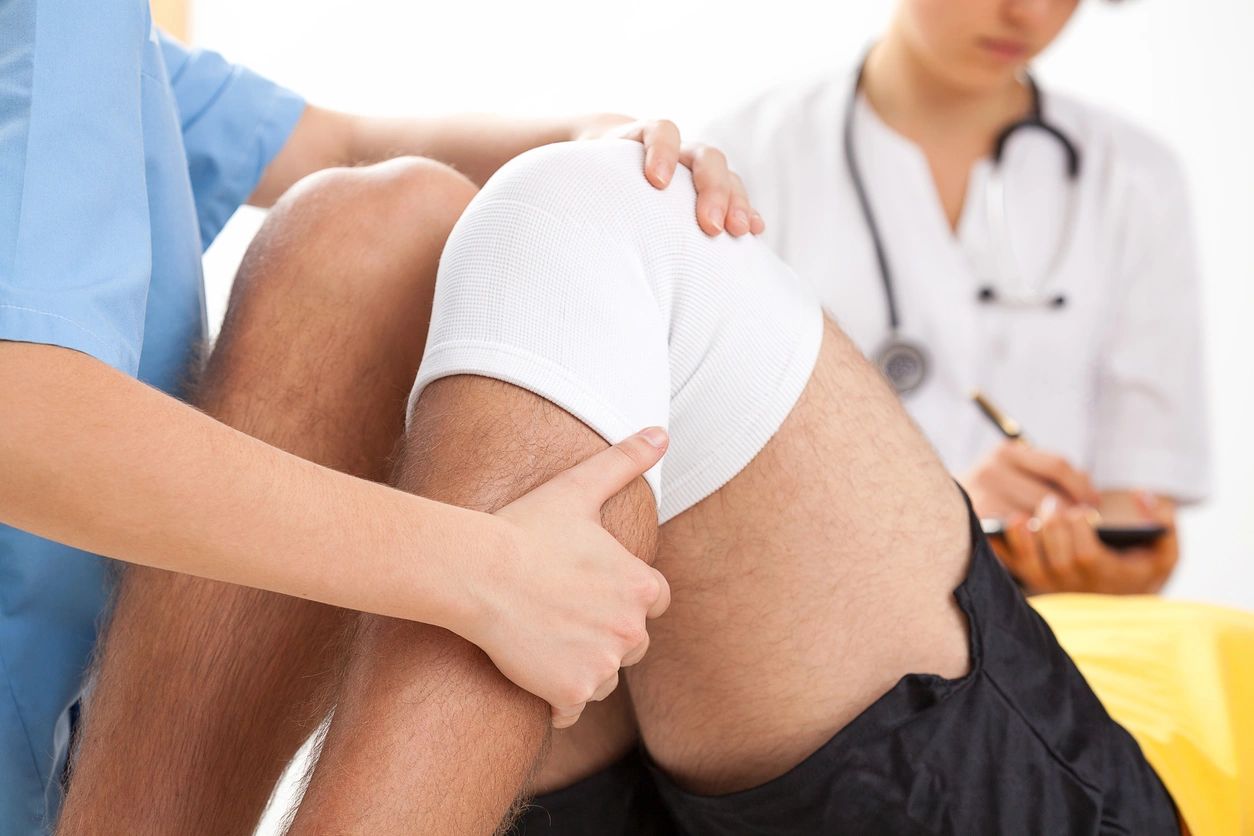
Protect – You can immediately immobilize the injury by employing splinting or bandaging. If you are not properly trained in how to splint, you may purchase splints at the local drug store. Splints should not be too tight, should limit movement at the joint and should allow for good circulation. Immobilization and splinting also protects the injury from further damage.
Rest – Stop doing whatever it was that causes you pain. Rest the injury do not do anything to aggravate it.
Ice – Apply ice to the site of injury. Ice can help to comfort the hot sensation caused by increased blood flow to the area and to reduce inflammation, which will help to reduce swelling and bruising
Compression – Compression can help to ease the pain associated with swelling and aid in the blood flow to the affected area. It can also help to control the swelling. Compression can be achieved by properly bandaging and with the use of over-the-counter splints and braces which have built in mechanisms of compression
Elevate – Elevation is important in the reduction of pain and swelling in that it prevents blood from pooling in the effected area thus preventing additional swelling and reducing pain and throbbing. The limb / injury should ideally be elevated above the heart in order to maximize the hydrostatic effect.
Rehabilitation and Return to Activity
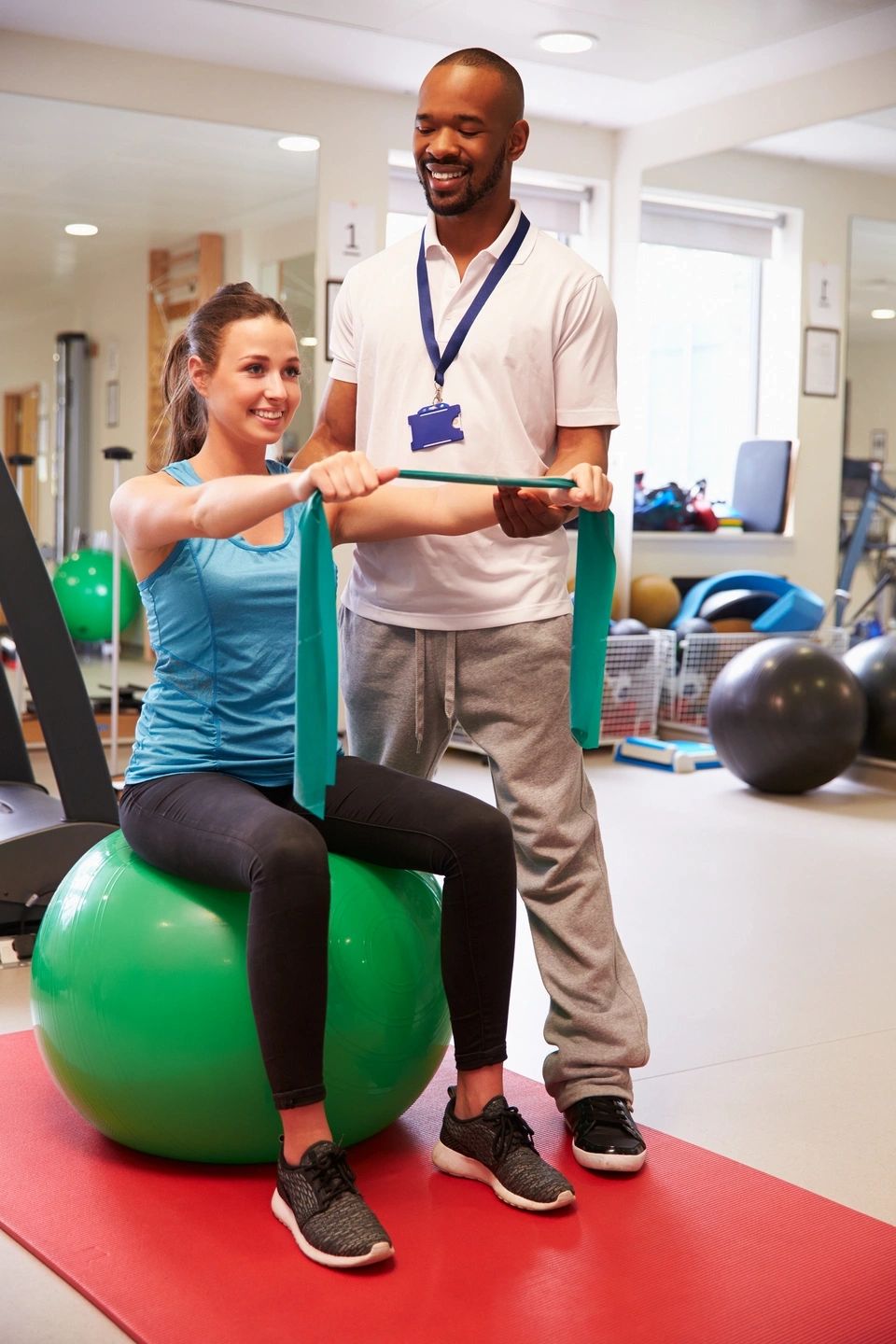
Rehabilitation begins within 48 to 72 hours of injury and consists of mild flexion and extension of the joint through a comfortable range of motion. Exercise should occur as tolerated. One’s pain should be their own guide. If pain is experienced beyond tolerability, the exercise should be stopped. Exercise should be progressive and dynamic activities should be avoided and approached cautiously. In cases of severe tears, it may take months to recover. It is important to not rush recovery. In general recovery can last from a few days to months or longer depending on severity and whether or not surgical intervention was required.
· Rehab early 48 – 72 hours
· Reduce pain and inflammation
· Begin with mild flexion and extension and isometrics
· Progressively increase the acute variables
· Work as tolerated
· Focus on Activities of Daily Living
· Follow the guidance of a trained physician or care provider
Summary
Not every case of sprain or strain will require seeing a doctor. However, it is always recommended that if you aren’t sure of the status of your condition and you aren’t confident in your ability to self-treat, you should consult a physician. Rehabilitation should be supervised by a trained professional or physician in more severe cases. Early rehabilitation is essential in preventing future distortion, imbalance and dysfunction of posture, muscles, and movement.
“Don't feel sad or get upset about your injury situation.
You can't change what has happened.
But you can change your future by being able to prevent your injuries.”
― Joerg Teichmann
SPONSORED ADS

Our world is changing faster than many can keep up. “THE NEW NORMAL” Only it’s not new and it’s not normal. Society has been slowly put into retrograde by an elite class who wants to bring about “The fourth industrial revolution”. Like frogs in a slow boiling pot, society has become conditioned to ceding their individual rights, censorship, mindlessly obeying government and rejecting logic and reason. If you enjoyed this article and others on this site, you will also enjoy 1984 Redux Say Hello to Big Brother. The book was so accurate about the corruption in government and the international cabal of corporate globalists that Amazon banned 5-star reviews of it, shadow banned it and refused to abide by their contractual obligations to promote it. This is why the book can no longer be found in print and is ONLY AVAILABLE HERE.
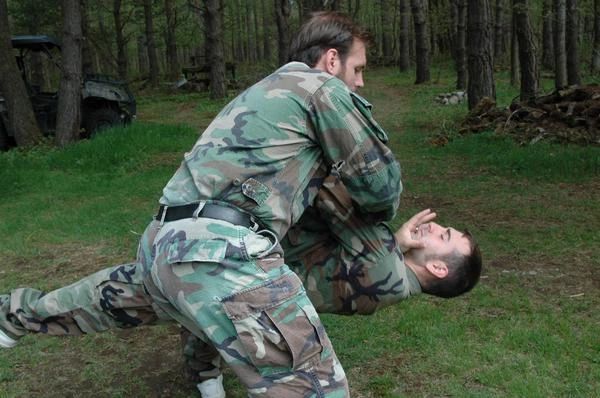
Learn Anatomical and biomechanically effective, lethal self-protection techniques designed by a Special Forces soldier for a Special Forces Team. Combat Application Techniques: Principles of Destruction was designed for elite operatives to use in the caves, urban areas, and front lines of the Global War On Terror (GWOT) and is NOT a martial art. The system that was once ONLY taught to military, law enforcement, and civilians who were vetted by police background check is now available to you in this digital eBook. ONLY AVAILABLE HERE

Other Articles you may like
General Adaptation Syndrome & Specific Adaptation
Injury Prevention: Joint Injuries
From Static Stretching to Dynamic Exercises: Changing the Warm-Up
How to Correct Rucking Postural Deficiencies and Muscle Imbalance
Self-Myofascial Release for Trigger Point Release
Three Stages of The Body's Healing Process
Muscle Adhesions and Why They Occur
Got Sore Muscles? Exploring Delayed Onset Muscle Soreness (DOMS)
.png/:/cr=t:0%25,l:0%25,w:100%25,h:100%25/rs=w:1280 "Click to donate")
Max U LLC is a 100 percent VA Disabled Combat Veteran Owned Small business. This blog is part of Max U's commitment to the consumer by providing education on health, wellness, and rugged individualism through teaching exercise science, and practical life skills free of cost. Although contribution it is not necessary, any donation to help keep the site running is helpful and appreciated.


